Blog list
Nova Vision Center Blog
Learn more about optometrist care in our blog!

Here are the things I want you to do for each of your children to ensure they see as well as possible...

The final section in our vision model, output is probably the easiest to describe. Problems in output are the reasons people visit a developmental optometrist...

The first thing I ask a child during a developmental exam is “Why are you here?” It may see like an odd question, but finding out, in the child’s own words, why they think they are in my office can be quite enlightening and occasionally quite entertaining...

We previously discussed how it is normal to see double all the time here. However, generally, when we discuss double vision, it is in non-normal situations.

Returning to our model of how the visual system works, Input is the first piece and evaluating input involves determining how well the eye itself functions...

Two nights ago I sat down in a meeting of my local optometric society. We discussed many issues but at one point the economy and jobs came up...

Many children reverse “b’s” and “d’s”, some even confuse them with “p’s” and “q’s”. Most parents find this very concerning and believe it is indicative a vision problem...

We all call perfect vision 20/20 but in actuality 20/20 is only one aspect of vision called visual acuity. Visual acuity is a test of fine detail central, vision...

When said by a doctor to a patient “I don’t know” can be the scariest phrase possible. The fear of the unknown is one of the toughest to deal with and people tend to assume the worst...
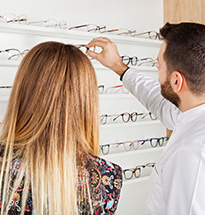
Optician: An optician generally works with glasses. They may help you pick out a pair of frames specific for you and help you select different lens designs...
Quick Links

All Eye
Care Services

Keep
In Touch
MAP
Powered by: